
In any African community, there are strict rituals one must follow when drinking alcohol.
Most practice libation; pouring of an alcoholic drink before the first sip.
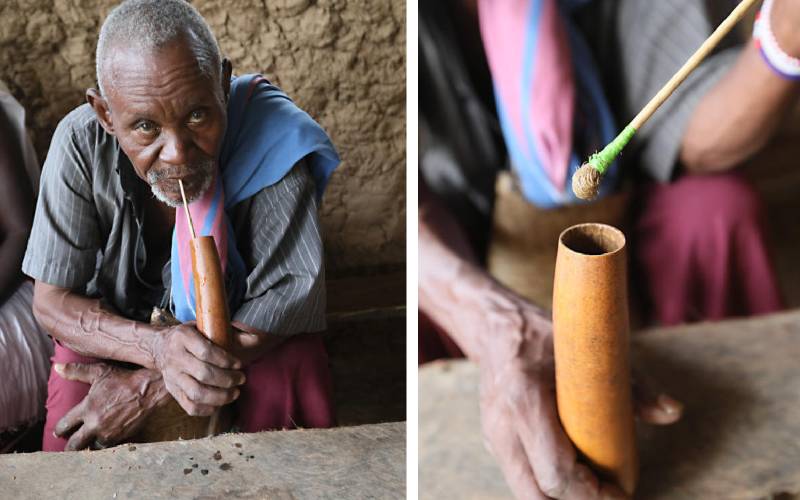
For the nine Coastal sub-tribes, taking mnazi or palm wine involves a mboko — a cylindrical slim gourd used as a straw.
But there are rituals on how to hold and pass it to the next person, as well as ways to wash and keep the mboko.
According to Mzee Ganda Kagumba, 86, one uses the left hand to hand over the mboko to the person seated next to him. The person then receives it with the right hand.
“It is a norm. We were taught by our forefathers and have chosen to respect it,” he explains.
This age-old custom is, however, fast fading away with the advent of modern containers taking centre stage at the popular drinking dens, locally known as Mangweni.
Palm wine consumers who are largely based in the Coastal counties of Kilifi, Lamu, Tana River, Kwale and Mombasa have for years wanted the drink to be declared legal.
“It is affordable and readily available, unlike the bottled beer which is expensive,” said Tsuma Washe, a palm wine tapper at Kokotoni in Rabai, Kilifi County.
Read Also: TAITA TAVETA MCAS SEEK TO LEGALISE TRADITIONAL BREWS
Kagumba, a Kaya elder, said he started drinking at the tender age of 15.
“I knew how to use the mboko when I was a teenager. The mbokos are cylindrical pods that come from the mtango plants. The top part is cut with a sharp knife before the soft tissues inside are scooped out,” says Kagumba.
He walks around with a basket tied to his waist. In it is his cherished mboko, which he has been using for the last eight years.
“It is refreshing to use mboko when drinking mnazi. I detest the use of glasses or any other containers that the palm wine tappers use to serve clients,” he says.
Kagumba reveals the glass bottles that are slowly replacing the mbokos were introduced by Italian missionaries.
“It is the youth who have embraced the use of plastic and glass containers. To them, it looks fashionable. I will never abandon the original mboko. I tried once to drink from a glass, but the wine was tasteless,’’ he recalls.
Barefoot and clad in a kikoi and shirt, Mzee Kagumba walks into a popular drinking den and orders a one-litre bottle.
Before he sips his drink, he pours some onto the ground. “Nahasa Koma (I am appeasing those who went before us),” he says.
As the tradition dictates, Kagumba says a palm wine tapper who descends from a coconut tree with his day’s fresh harvest will give out at least two bottles before distributing the rest to the sellers.
According to Kagumba, women are allowed to sit with men in the drinking dens.
In Taveta Sub-county, Ibrahim Ngelesha, a retired primary school teacher, said they resorted to using glasses and plastic containers due to the unavailability of the mtango plants coupled with hygiene issues.
Read Also: FORGET MIRAA, MERU IS HOME FOR SUPER WINE
“Glasses and other plastic containers are easy to wash, unlike the mbokos that absorb dirt after being in use for a long time,” Ngelesha said.
Tau Mwaga, another consumer, dismisses reports that those who drink the wine have become useless in bed and abandoned their duties as heads of families.
“This milky sap is not the leading cause of family breakups. Those who consume palm wine are very responsible.”
Palm wine dealers have had to withstand many challenges over time. There were plans by the government to regulate the consumption of the natural drink that has no impurities.
Mnazi enthusiasts have argued that it is part of their culture because of the role it plays in cultural ceremonies like weddings, child naming and birthday parties.
Attempts by the now-defunct Kenya Coconut Development Authority to introduce new stringent laws to regulate the consumption of mnazi faced a lot of resistance.
“We see mnazi as a holy drink that comes from a tree that has several uses,” said Mangale Kato, a resident of Mtwapa.
Read Also: BANANA FARMERS IN TAVETA CALL FOR COMPLETION OF FACTORY
He argued that earlier attempts to regulate the consumption of mnazi were plans to outlaw its use just like chang’aa, a local brew that was declared illegal.
And with plans to put up a modern mnazi wine bottling plant in Rabai, residents are optimistic that they stand to benefit.
“It will go a long way in giving recognition to this age-old liquor as well as create employment,” says Samuel Iha, a Mombasa trader.
Agriculture Principal Secretary Hamadi Boga said last year there were plans to put up a 150,000-litre capacity coconut juice processor at Kwa Juaje in Rabai.
Sh160 million for the construction of the plant has been set aside, with the national government expected to give Sh60 million and the World Bank to donate Sh100 million.

more recommended stories
 THE GOVERNOR DISCOVERS FISCAL DISCIPLINE — FOUR YEARS TOO LATE?
Perhaps one of the most.
 SHAKAHOLA: 200 YEARS FOR MACKENZIE, BUT WHO WILL ANSWER FOR THE STATE’S FAILURE?
Kwaela News Network | Editorial.
 WHO IS THIS GOVERNOR TAITA-TAVETA COUNTY IS LOOKING FOR BEYOND 2027?
As the 2027 General Election.
 COURT HALTS COAST WATER DISCONNECTIONS AS EJF CHALLENGES SH6 BILLION DEBT CLAIM
Kwale, 29 August 2026 —.
 THE LEGENDARY 70-YEAR-OLD MZIMA PIPELINE LIVES TO BURST ANOTHER DAY
Government Celebrates Repairing What It Failed.
 TRAGIC LOSS OF JOHN KALAGHE JOSHUA LEAVES FAMILY AND COMMUNITY IN MOURNING
It is with profound sorrow and.
 THE NAIROBI–MOMBASA EXPRESSWAY: A DECADE OF PROMISES, YET NO HIGHWAY IN SIGHT
The Highway That Exists Only.
 FROM FUEL TO DRINKING WATER: HOW A BILLION-SHILLING PIPELINE DREAM RAN AGROUND
A Lesson in Why Politics Should.
 LIKONI BRIDGE: WHAT HAPPENED TO RUTO’S KSH 100 BILLION PROMISE?
For years, residents of Mombasa and.
 MZIMA PHASE TWO: SIX DECADES OF PROMISES, DELAYS AND GOVERNMENT FAILURE
Coast Residents Continue to Suffer as.
 ABSENT LEADERSHIP OR CALCULATED DISRESPECT? QUESTIONS MOUNT OVER KINGI’S NO-SHOW AT MGANGE NYIKA FUNDRAISER.
Serious questions are emerging following the.
 ATHANAS MBELE’S “BIG 7 AGENDA” VISION POSITIONS WUNDANYI FOR TRANSFORMATIONAL GROWTH
Wundanyi is emerging at the center.
 POLITICS ON OVERDRIVE
Kenya is not a permanent.
 WHY TAITA TAVETA NEEDS ITS OWN POLITICAL VEHICLE
By Geoffrey Kimonge (GK) The Case.
 HAS GREED CONSUMED THE TAITA TAVETA COUNTY ASSEMBLY?
By Geoffrey Kimonge (GK) Has the.
 THE COLLAPSE OF PAA: AMASON KINGI’S POLITICAL HOLLOWING EXPOSED IN MAGARINI AND TAITA TAVETA
By any political measure, Pamoja.
Leave a Comment