
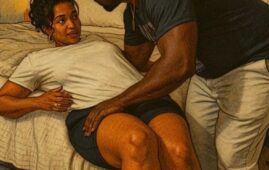
Womens discrimination. Nice unpleasant adult man sitting near his colleague and touching her legs while sexually harassing her

Over the last decade, the pervasiveness and the cost of sexual harassment, a manifestation of sex-based discrimination, has become a growing concern at the national and international level. The ILO defines sexual harassment as a sex-based behaviour that is unwelcome and offensive to its recipient. For sexual harassment to exist these two conditions must be present.
Sexual harassment may take two forms:
1) Quid Pro Quo, when a job benefit – such as a pay rise, a promotion, or even continued employment – is made conditional on the victim acceding to demands to engage in some form of sexual behaviour; or;
2) hostile working environment in which the conduct creates conditions that are intimidating or humiliating for the victim.
Behaviour that qualifies as sexual harassment:
PHYSICAL Physical violence, touching, unnecessary close proximity, a strip search by or in the presence of the opposite sex
VERBAL Comments and questions about appearance, life-style, sexual orientation, unwelcome graphic comments about a person’s body made in their presence or directed toward them, sex-related jokes or insults, offensive phone calls
NON – VERBAL Whistling, sexually-suggestive gestures, display of sexual materials, indecent exposure
• A survey published in Hong Kong in February 2007 showed that nearly 25% of workers
interviewed suffered sexual harassment with one-third of them men. Among male workers, only 6.6% reported their grievance (compared to 20% of women) because they felt too embarrassed to face “ridicule”.
• According to a 2004 report issued in Italy, 55.4% of women in the 14-59 age group reported having been victim of sexual harassment. One out three female workers are subjected to sexual intimidations for career advancement with 65% blackmailed weekly by the same harasser, usually a co-worker or supervisor. Furthermore, 55.6% of women subjected to sexual intimidation had resigned from the job.
• In the European Union, 40-50% of women have reported some form of sexual harassment at the workplace;
• According to a survey carried out by the Australian Equal Opportunity Commission in 2004, 18% of interviewees aged between 18 and 64 years said they had experienced sexual harassment in the workplace. Of those who experienced sexual harassment, 62% were physically harassed and less than 37 % were likely to report the abuse;
International Labour Office Declaration on Fundamental Principles and Rights at Work WORK IN FREEDOM
• Research shows that the type of women most vulnerable to sexual harassment are young, financially dependent, single, or divorced and with a migrant status. For men, those most harassed are young, gay, and members of ethnic or racial minorities.
• Sexual harassment between people of the same sex is a recent but growing trend.
Experiences in many countries have shown that effective action against sexual harassment in the workplace requires a combination of legal frameworks as well as greater enforcement, adequately funded institutions and a greater awareness of the issues. Some examples of developments on this front are listed here.
A number of national governments have adopted relevant legislative provisions that address sexual harassment in the workplace:
Criminal laws – India, Tanzania;
Labour codes – Chile, Thailand;
Laws targeting sexual harassment – Brazil, Belize, Philippines, Israel;
Equality and sex discrimination laws – Japan, South Africa;
National Human Right Legislation – Canada, Fiji, New Zealand;
Laws on safe working conditions – The Netherlands;

• In 2006, the Equal Employment Opportunity Commission (EEOC) in the USA received 12,025 complaints of sexual harassment at the workplace. This is a 100% increase in just 5 years with 15.4% of these complaints filed by men. The EEOC resolved 11,936 charges and recovered $48.8 million in damages from the companies in which the complantants worked. This does not include awards gained through litigations.
• According to a survey carried out by the US Army in 1999, the cost of sexual harassment cases involving Army (male and female) members amounted to $250 million. The study covered costs for productivity loss, absenteeism, separation, replacement and others.
• In 2004, a woman working as a security guard in South Africa won a significant case of sexual harassment: it was the first time an employer was held liable for sexual harassment by one of his employees. The company was ordered to pay the victim compensation for
unfair dismissal and sexual harassment.
• In India, the landmark case of Vishaka vs. State of Rajastha brought a shift in the legal definition of sexual harassment by the Supreme Court. Previously identified as “Eve teasing”, sexual harassment was defined by the court judgment as a violation of women’s human rights. The judgment also outlined guidelines for its prevention and redress.
Psychological suffering including humiliation, reduced motivation, loss of self-esteem;
Behavioural change including isolation, deterioration of relationships;
Stress-related physical and mental illness including drugs and alcohol abuse;
Victims foregoing career opportunities, leaving employment or committing suicide;
Decreased enterprise productivity, due to:
• impaired judgment
• compromised teamwork
• de-motivation
• absenteeism
No applicants will fill vacancies at workplace where they fear sexual harassment;
Progress and innovation within the enterprise are hindered when the environment is deficient in trust and team spirit;
Long-term rehabilitation costs for the reintegration
of victims;
Unemployment welfare benefits and retraining;
Invalidity costs for those with impaired working capacities;
Legal and criminal justice expenses;
Women’s undermined access to high-status and well paid jobs, traditionally

 LOVE STOPPED !!
I would cheer on Mwamburi as.
 POLYGAMY, CHRISTIANITY AND MODERNITY: HOW AFRICA’S SOCIAL ORDER WAS DISRUPTED
For generations, African societies were governed.
 WOMEN DON’T GET CAUGHT CHEATING LESS THAN MEN BECAUSE THEY’RE SMARTER OR MORE LOYAL …✍🏽
They get caught less because.
 WHEN FATHERHOOD BECOMES OPTIONAL: CALLING OUT THE IMMATURITY OF “DEADBEAT” PARENTING
In communities around the world,.
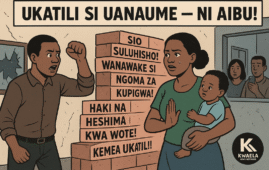 WANAWAKE SIO NGOMA ZA KUPIGWA!
Ni jambo la kusikitisha kwamba.
 POPE FRANCIS: HONORING A GLOBAL ICON WHILE HOLDING FIRM TO GOD’S TRUTH
By Pastor Cassian Ngotho Mwachanya.
 WHEN THE ROD BECOMES THE GUIDE: RETHINKING DISCIPLINE IN A CHANGING WORLD
By Pastor Cassian Ngotho Mwachanya.
 7 REASONS WHY MEN WILL ALWAYS ASK YOU FOR SEX
Its a bit long but.
 OUR PERSPECTIVES SHAPE OUR DESTINIES !
I LOVE YOU SO MUCH.
 IF LOOKS COULD KILL, MY RAPIST WOULD BE DEAD
It’s been months since my.
 JOYCE LAY SPEAKS OUT ON MARRIAGE ISSUES AFTER HUSBAND BILL LAY’S HEART ATTACK
By Winnie Mabel Former Taita Taveta.
 PRESIDENT RUTO AND THE LGBTQ RULING QUESTION
The 27th February, 2023 controversial Supreme.
 KENYA’S SUPREME COURT HAS APPROVED LGBTQ ORGANIZATIONS IN KENYA
This is a huge win for.
 MY EX WIFE DENIED ME MY CONJUGAL RIGHTS
Denying a man sex is a.
 GETTING PREGNANT WITH HIV
By Miriyam Binti Eddy Many ladies.
 A CHEATER IS BORN CHEATER SAYS JOYCE LAY
Former Taita Taveta woman representative Joyce.
Leave a Comment