
By Peter Njenga
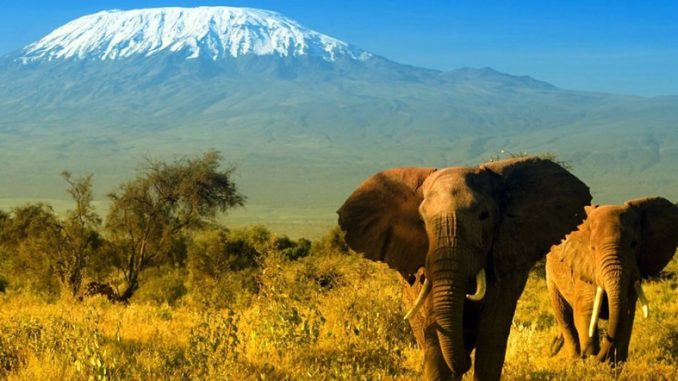
The Tsavo National Park, opened in 1948, is the largest national park in Kenya and one of the largest in the world. It’s made up of two separate parks separated by the Mombasa – Nairobi railway line: Tsavo East National Park and Tsavo West National Park. Tsavo East National Park is the larger one covering 13,747 sq.km while Tsavo West National Park covers an area of 9,065 sq.km, giving a total of 22,812 sq.km.
Taita Taveta County covers an area of 17,083.9 km2. of which a bulk of it, 62% or 11,100 sq.km is within Tsavo East and Tsavo West National Parks.
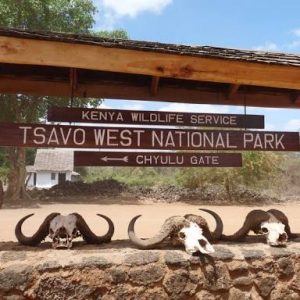
According to the Constitution in Article 62 (1), national parks have been identified as public land. In addition, they shall vest in and beheld by the national government in trust for the people of Kenya and shall be administered on their behalf by the National Land Commission -Article 62(3). It’s important to note that the Constitution does acknowledge the people of Kenya as the owners of land in Kenya. Further, by that recognition, the constitution further goes ahead to provide a mechanism by which the people of Kenya may derive direct benefit from it by directing the manner in which it may be disposed or otherwise in Article 62(4), which states:
62(4). Public land shall not be disposed of or otherwise used except in terms of an Act of Parliament specifying the nature and terms of that disposal or use.
As in all other areas of law that needed review or new enactment after the promulgation of the new constitution in 2010, the law governing wildlife conservation was reviewed and on 10th January 2014, the Wildlife Conservation and Management Act, 2013, came into force.
Historically, communities living within the Tsavo Conservancy area benefited from this huge ecosystem, providing a means of likelihoods to hundreds if not thousands of households. However, with the conversion of these areas into protected areas for wildlife conservation as national parks, many were cut off from accessing the parks and in the process denied their God-given rights of benefiting from the ecosystem from which through ages had lived in harmony with.
It became a crime to even be found within the parks without “authority”. Strangely, this denial of direct benefit is only applicable to communities living around national parks. Those with National Reserves enjoy more relaxed restrictions and to a large extent are allowed to manage the resources for their benefit.
Taita Taveta County not only has it been grossly marginalized, it has also for years borne the brunt of increasing and devastating effects of human wildlife conflicts with nothing tangible in return. Millions of Kenya Shillings in compensation claims remain unpaid as citizens continue to suffer from loss of their loved ones. Their bread winners.
The national park has become more of a curse than a blessing.
Time has come for communities living around national parks to be heard. And notjust to be heard but also to be allowed to directly benefit from the resources within their vicinity. And no other county deserves this more than Taita Taveta County that hosts one of the largest parks in the world. The Constitution does provide for that and the Wildlife Conservation and Management Act 2013 does also provide for the mechanism for that under Article 34, which states:
34. A notice under this section which proposes to-
(a) vary the boundaries of a national park; or
(b) change the status from national park to wildlife conservancy or sanctuary;
shall only be published by the Cabinet Secretary where a proposal is recommended by the Service after consultation with the National Land Commission in accordance with subsection (2) of this section and is
subsequently approved by a resolution of Parliament….
Through the variation of the boundaries or changing of the status from National Park to National Reserve will enable the county governments to enter into a management agreement with any management agent or the Kenya Wildlife Service for the management of the national reserve thereby providing the countyzens direct benefit.

more recommended stories
 TAITA TAVETA COUNTY GOVERNMENT’S SHAME ON DISPLAY
When a county’s Chief Executive.
 GODOMA TITLE DEEDS: A HISTORIC MILESTONE MARRED BY QUESTIONS OVER ACCURACY
GODOMA – BURA, TAITA TAVETA, Residents.
 QUESTIONS MOUNT OVER APPOINTMENT OF NEW COUNTY INSPECTORATE DIRECTOR IN TAITA TAVETA
A cloud of uncertainty is.
 FROM COUNTY HALL TO PPCK: GRANTON SAMBOJA’S LEADERSHIP RECORD FACES RENEWED SCRUTINY
Former Taita Taveta Governor Granton Samboja.
 WHO IS JUSTICE AMRAPHAEL MBOGHOLI MSAGHA? THE TAITA SON WHO ROSE TO THE SUMMIT OF KENYA’S JUDICIARY
In the hills of Taita Taveta.
 Decisive Leadership, Not Polite Governance, Is What Taita Taveta Needs
By all accounts, leadership is not.
 MWANGEKA WA MALOWA
Kufuma konkala Wadawida ndewerekoghe na.
 TAITA TAVETA LANDS CECM MOVES TO COURT OVER SALARY ARREARS AND REMOVAL DISPUTE
MOMBASA, KENYA — Taita Taveta.
 MRAMBA COMMUNITY LAND: COMMUNITY DEMANDS SWIFT REGISTRATION AS LEGAL AND GOVERNANCE DISPUTES CONTINUE
Residents of the eight communities that.
 WHOSE LAND? WHOSE MONEY?
Members Demand Answers Over Qwetu Sacco’s.
 Analysis of the Auditor-General’s Findings on the County Executive of Taita Taveta (FY 2024/2025)
The Auditor-General issued a Qualified Opinion,.
 SH320 MILLION, SH8,000 A DAY: THE COSTLY FAILURE OF MAUNGU LORRY PARK
The story of Maungu Lorry.
 EACC REPORT EXPOSES IRREGULAR SPENDING AND PROCUREMENT VIOLATIONS AT TAITA TAVETA COUNTY ASSEMBLY
Voi, Kenya – The latest quarterly.
 EXPOSÉ | WATER PAID, SERVICE DENIED
Inside the payment breakdown linking TAVEVO.
 50 YEARS OF DRY TAPS: THE SHAME OF MWASOKO WATER PROJECT
How a 1975 Government Water Scheme.
 KSH 500 MILLION IN QUESTION: AUDIT EXPOSES DEEP FINANCIAL CRACKS AT TAVEVO
By Kwaela News Network Investigations Desk.
Leave a Comment